The company
Two founders, one practice, one decision
DiggAi was not created on a drawing board but in a doctor's practice. This page explains who is behind it, how we work and what we want to be measured against.
1Why DiggAi exists
Why DiggAi exists
The impulse was not market research but a biography. Laith Alshdaifat spent years interpreting in medical practices. The problem was never the language — it was what got lost between the sentences: the when, the how often, the what-alongside-what.
Nobody makes a mistake in the process. Relatives translate as well as they can; the doctor listens. And yet less ends up on the form than the patient brought with her. That is not a language problem, it is a capture problem. And capture can be built.
That is where the 13 languages come from. They are not a market decision, nor a translation package ordered after the fact, but the result of years in the consulting room — on both sides of the desk. Anyone who has interpreted themselves knows where a question goes wrong, and what a person understands who is still learning the language.
The second impulse came from the practice itself. Dr Christian Klaproth has watched for years how much working time paper forms, follow-up questions at the desk and retyping consume. Both observations point to the same gap — DiggAi closes it from both sides.
2The team
The team
DiggAi is carried by two founders whose skills complement each other: technology meets medical practice.
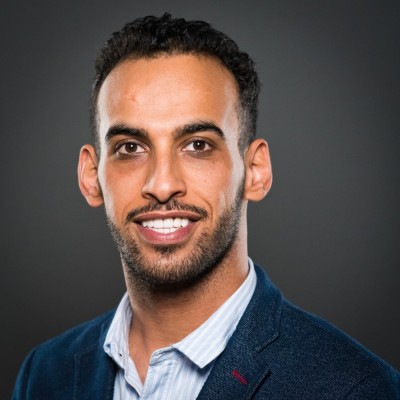
Laith Alshdaifat
Technical co-founder — architecture, cryptography, development
Is completing his medical engineering degree at HAW Hamburg and works as an AI and software developer. Raised trilingually (Arabic, German, English), with family roots in a Jordanian hospital and years of work as an interpreter in everyday medical settings.
Projects and methodology: the developer's portfolio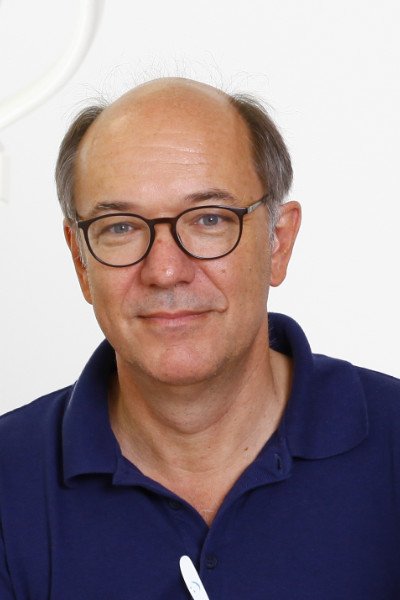
Dr. Christian Klaproth
Medical co-founder — specialist in vascular surgery
Responsible for the medical and practice-side work, and at the same time runs the pilot practice in which DiggAi is in live operation. As a result every requirement comes from a real workflow rather than an assumption.
Career and work: the physician's portfolio3How we build
How we build
There are two of us. The platform has 13 languages, desktop applications for Windows and macOS, an interface into practice management software — and more than 3,000 automated tests that run before every release.
That does not work by typing faster, but through a rule we keep: think once, thoroughly, then execute cheaply. Every decision is made carefully once and then fixed as a rule, a check or a test. After that the execution can be automated — the thinking beforehand cannot.
The effect is verifiable: our own checks block a release if a text breaches our regulatory guardrails, if a language file is incomplete, or if an architectural rule has been broken in the code.
4Where we stand
Where we stand
DiggAi is not a concept. Since May 2026 the pilot practice has been working with real patients, and the platform is developed further there in weekly feedback cycles.